← Back to Equipment Financing Articles
A TRAC lease (Terminal Rental Adjustment Clause lease) can significantly lower monthly payments and total interest when financing commercial vehicles and heavy equipment. Learn how it works, why it often saves businesses money, and when it makes the most sense.
What Is a TRAC Lease?
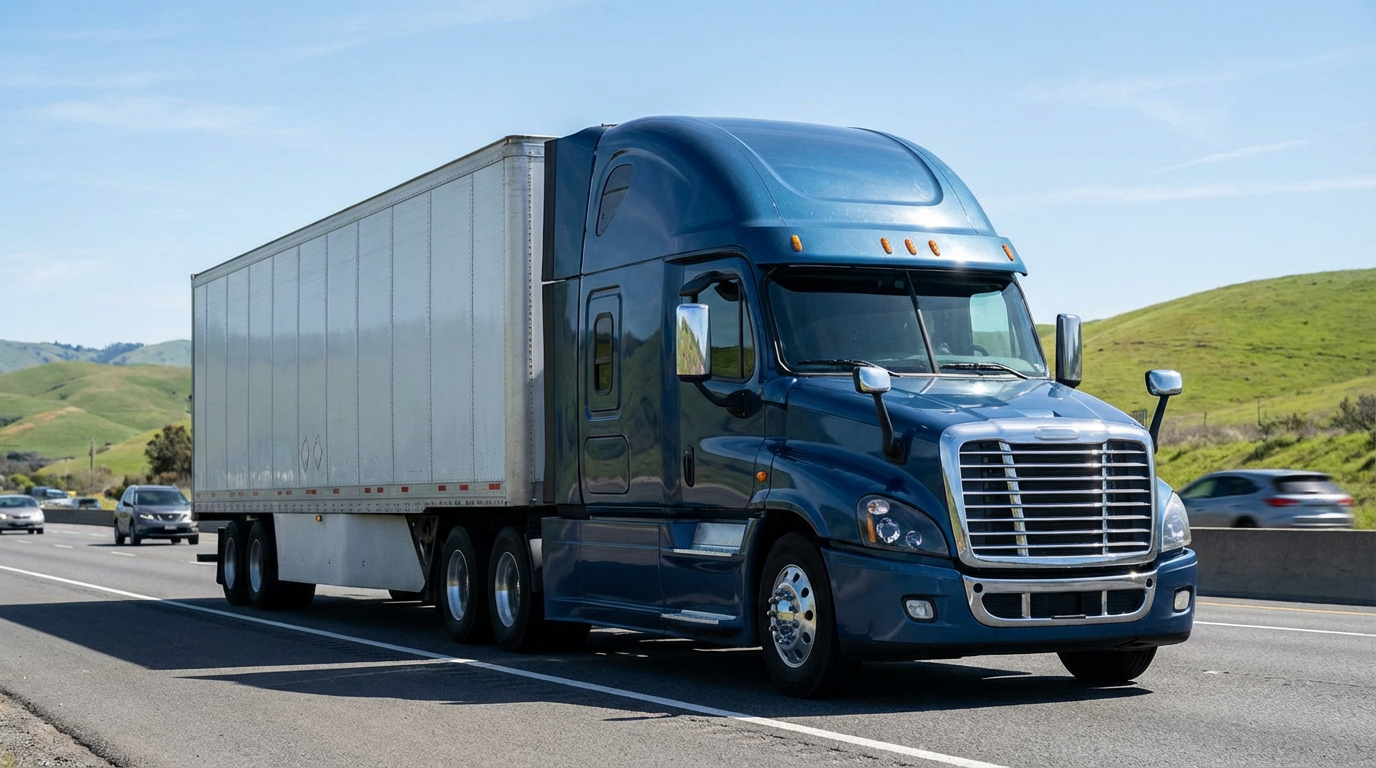
A TRAC lease (Terminal Rental Adjustment Clause lease) is a type of equipment lease commonly used for commercial vehicles and heavy equipment, especially:
- Semi-trucks
- Dump trucks
- Construction equipment
- Trailers
- Logistics vehicles
Unlike a traditional equipment loan, a TRAC lease allows the residual value of the equipment to reduce the financed amount, which can significantly lower monthly payments and total financing costs.
The key feature is the Terminal Rental Adjustment Clause, which sets an agreed-upon value for the equipment at the end of the lease. Because the equipment retains value, lenders can structure the lease with lower monthly payments and reduced interest exposure.
How a TRAC Lease Works
A TRAC lease separates the financing into two parts:
- Depreciation Portion—The amount the equipment is expected to lose in value over the lease term. This is what you finance and pay back.
- Residual Value—The agreed-upon value of the equipment at the end of the lease. This amount is not financed; it is set aside and settled when the lease ends.
Instead of financing the full equipment cost like a loan, the borrower only finances the portion of the equipment that is expected to depreciate during the lease term. The residual value is excluded from your monthly payment calculation, which is why TRAC leases typically produce lower payments than traditional equipment loans.
Example 1: Dump Truck ($150,000)
Imagine a construction company needs a $150,000 dump truck. Here's how the numbers differ:
Traditional equipment loan (60 months, 8% rate):
- Finance full $150,000
- Monthly payment: approximately $3,042
- Total paid over 60 months: $182,520
- Total interest: $32,520
TRAC lease (60 months, 8% rate, $40,000 residual):
- Residual value agreed at lease signing: $40,000
- Amount financed: $110,000 ($150,000 minus $40,000)
- Monthly payment: approximately $2,231
- Total lease payments over 60 months: $133,860
- At lease end: equipment is sold; if it sells for $40,000, the lease settles. If it sells for more, you may get a credit. If it sells for less, you may owe the difference.
In this example, the TRAC lease saves roughly $800 per month compared to the loan—money the business can use for fuel, payroll, or other operating costs.
Example 2: Semi Truck ($200,000)
A trucking company financing a $200,000 semi truck with a 60-month term:
Equipment loan: Financing the full $200,000 at 8% over 60 months results in a monthly payment of about $4,056. Total interest over the life of the loan: approximately $43,360.
TRAC lease with $55,000 residual: The company finances only $145,000. Monthly payment drops to about $2,941—a savings of over $1,100 per month. The semi truck retains strong resale value, so lenders are comfortable with a higher residual. Over five years, that's roughly $66,000 less in total payments before the end-of-lease adjustment, which can be a game-changer for cash flow in a freight business.
Example 3: Trailer Fleet
A logistics company needs three dry van trailers at $45,000 each ($135,000 total). With a TRAC lease, the lender might set a combined residual of $36,000 (about 27% of original cost). The company finances $99,000 instead of $135,000. On a 48-month lease at 7%, monthly payments could be around $2,370 instead of $3,230—nearly $860 per month in savings. That freed-up capital can fund an extra driver, fuel, or maintenance reserves.
How the Terminal Rental Adjustment Clause Works at Lease End
The "terminal" in Terminal Rental Adjustment Clause refers to the end of the lease. Here's what typically happens:
- During the lease: You make monthly payments based on the depreciating portion only. The residual is not part of your payment stream.
- At lease end: The equipment is sold (often at auction or to a dealer) or formally appraised.
- If the equipment sells for the agreed residual or more: The lease settles. Any amount above the residual may be returned to you as a credit, depending on the agreement.
- If the equipment sells for less than the residual: You may owe the difference (the "terminal rental adjustment"). This protects the lender, since they assumed the equipment would retain that value.
Because TRAC leases are used for equipment with predictable resale value—trucks, trailers, construction machinery—the residual is usually set conservatively. In many cases, equipment sells at or above the residual, so the borrower owes nothing extra at the end.
Why TRAC Leases Often Save Businesses Money on Interest
1. Lower Principal Being Financed
Interest is charged on the financed balance. With a TRAC lease:
- You are not financing the entire equipment price
- The residual value is excluded from most of the interest calculation
- This reduces the total interest paid over the life of the lease.
Using the dump truck example: financing $110,000 instead of $150,000 means you pay interest on $40,000 less. At 8% over 60 months, that's thousands of dollars in interest savings. The math is straightforward: smaller principal equals less interest, period.
2. Lower Monthly Payments
Because the financed portion is smaller, TRAC leases usually produce:
- Lower monthly payments
- Better cash flow for the business
- More equipment purchasing power
For companies operating trucks or heavy machinery, this can free up capital for payroll, fuel, additional equipment, and operating costs. A trucking company saving $1,100 per month on each tractor can reinvest that into a down payment on another truck, hire an extra driver, or build a maintenance reserve. Over a multi-year lease, those savings compound into meaningful capital for growth.
3. Tax Advantages for Many Businesses
In many cases, TRAC leases are treated as operating expenses rather than traditional loans. This can allow businesses to:
- Deduct lease payments as operating expenses
- Simplify depreciation accounting (no need to track depreciation schedules)
- Align tax deductions with actual cash outflows
Tax treatment varies depending on the structure, lease terms, and how the IRS characterizes the arrangement. Some TRAC leases are structured as true leases (operating lease treatment); others may have different tax implications. Businesses should always confirm with their CPA or tax advisor before signing. The right structure can provide meaningful tax benefits, especially for companies in higher tax brackets.
4. Flexible End-of-Term Options
At the end of a TRAC lease, the equipment is sold or valued. Possible outcomes include:
- Equipment sells above residual value → The excess may be returned to you as a credit. Some agreements share the upside; others flow it entirely to the lessor. Check your contract.
- Equipment sells below residual value → You may owe the difference (the terminal rental adjustment). This is the main risk: if resale values drop unexpectedly, you could have an end-of-lease payment.
- Business may purchase the equipment → Some TRAC leases allow you to buy the equipment at the residual or at fair market value. This gives you the option to keep assets that have performed well.
This structure allows lenders to reduce payments while still protecting the equipment's future value. Because TRAC equipment—trucks, trailers, construction machinery—typically holds value well, the terminal adjustment is often zero or favorable for the borrower. Lenders set residuals based on historical resale data, so they're usually conservative.
How Residual Values Are Set
Understanding how the residual is determined can help you evaluate a TRAC lease offer. Lenders typically use:
- Historical resale data—Auction results, dealer trade-in values, and industry guides (e.g., Truck Blue Book, equipment valuation guides) for similar equipment at the expected lease end.
- Equipment type and brand—Major brands (Peterbilt, Kenworth, Freightliner, etc.) and popular configurations hold value better than obscure or specialty equipment.
- Lease term length—Longer terms mean more depreciation; residuals are usually a lower percentage of original cost for 60- or 72-month leases than for 36- or 48-month leases.
- Expected wear and mileage—Lenders assume normal use. Heavy use or high mileage can affect the residual or the end-of-lease settlement.
Residuals are typically set at 20–35% of the original equipment cost for a 60-month lease on commercial vehicles, though this varies by asset type and market conditions. A higher residual means lower monthly payments but a larger potential obligation at lease end if the equipment sells for less than expected.
Equipment Commonly Financed With TRAC Leases
TRAC leases are widely used for equipment that retains strong resale value, including:
- Semi trucks
- Dump trucks
- Flatbed trucks
- Tanker trucks
- Trailers
- Construction vehicles
- Fleet vehicles
Because these assets maintain resale value, lenders can safely apply a residual.
TRAC Lease vs Equipment Loan
| Feature | TRAC Lease | Equipment Loan |
|---|---|---|
| Monthly Payment | Lower | Higher |
| Interest Cost | Often lower | Higher |
| Ownership | End-of-term options | Immediate ownership |
| Residual Value | Yes | No |
| Cash Flow | More flexible | Less flexible |
Businesses focused on cash flow and lower payments often choose TRAC leases. See Equipment Loan vs Lease: Which Is Better? for a broader comparison.
When a TRAC Lease Makes the Most Sense
A TRAC lease works best when:
- The equipment has strong resale value—Lenders will only offer TRAC leases on assets they can reliably value at lease end. Trucks, trailers, and heavy equipment fit; highly specialized or rapidly obsolete equipment may not.
- The business wants lower monthly payments—If cash flow is tight or you prefer to preserve capital for operations, a TRAC lease reduces your monthly obligation.
- The company operates vehicles or fleet equipment—TRAC leases were designed for over-the-road and commercial vehicle financing. Trucking, construction, and logistics companies are natural fits.
- Cash flow flexibility is important—Seasonal businesses, those with variable revenue, or companies scaling up benefit from lower fixed payments.
Industries that frequently use TRAC leases include trucking, construction, logistics, waste management, and agriculture. Any business that relies on trucks, trailers, or heavy machinery with predictable resale value can typically access TRAC financing.
Risks and Considerations
TRAC leases are not without trade-offs. Key considerations:
- End-of-lease obligation: If the equipment sells for less than the residual, you owe the difference. Market downturns, excess supply, or equipment condition issues can trigger this. Mitigation: Choose equipment with stable resale value and maintain it well.
- No equity during the lease: You don't own the equipment until you buy it at lease end (if that option exists). If you want to build equity from day one, an equipment loan may be better.
- Mileage and use restrictions: Some TRAC leases include mileage caps or use restrictions. Exceeding them can increase the terminal adjustment. Read the agreement carefully.
- Residual risk: A high residual lowers payments but increases exposure if resale values drop. A conservative residual may mean slightly higher payments but less end-of-lease risk.
For most trucking and construction businesses, the benefits outweigh the risks—especially when equipment is well-maintained and the industry has stable resale markets.
TRAC Lease Timeline: What to Expect
From application to lease end, here's a typical flow:
- Application: Submit business and equipment details. Lenders evaluate credit, revenue, and equipment type. Many TRAC lease applications are reviewed within 24–48 hours.
- Quote and residual: The lender provides a quote with monthly payment, term, and residual value. Compare multiple offers if possible.
- Documentation: Sign the lease agreement. You'll receive a copy specifying the residual, payment schedule, and end-of-term process.
- Funding: The lessor pays the dealer or seller. You take possession of the equipment and begin making monthly payments.
- During the lease: Make payments on time. Maintain the equipment per the agreement. Track mileage or hours if required.
- Approaching lease end: The lessor typically contacts you 90–120 days before the term ends. You'll discuss options: return the equipment, purchase it, or extend the lease if available.
- Termination: Equipment is sold or appraised. You receive a settlement statement showing whether you owe a terminal adjustment or receive a credit. Any amount owed is typically due within 30 days.
How to Qualify for a TRAC Lease
Most lenders evaluate:
- Business credit profile—Credit scores of 550+ are typical; 680+ often secure the best rates and terms. Personal credit may be reviewed for smaller businesses or startups.
- Time in business—Many lenders prefer 1–2+ years of operating history. Startups may qualify with strong credit and a larger down payment.
- Equipment type and age—New equipment is easier to finance. Used equipment may qualify but often with a lower residual and shorter terms. Equipment must have clear resale value.
- Down payment—Sometimes optional for strong credit; 10–20% down can improve approval odds and terms for marginal applicants.
Strong applicants may qualify for low or no down payment, fast approvals, and competitive lease rates. In many cases approvals can happen within 24–48 hours. See credit score requirements for equipment financing and how fast equipment financing can be approved for more detail.
TRAC Lease FAQ
Can I finance used equipment with a TRAC lease?
Yes, but it's less common than for new equipment. Lenders need reliable resale data for the residual. Used semi trucks, dump trucks, and trailers in good condition can qualify. The residual may be lower and the term shorter than for new equipment. See can you finance used equipment for general guidance.
What happens if I want to keep the equipment at lease end?
Many TRAC leases allow you to purchase the equipment at the residual value or at fair market value. The contract will specify the buyout terms. If you've maintained the equipment well and it's worth more than the residual, buying at the residual can be a good deal.
How is the residual value determined?
Lenders use industry guides, auction data, and historical resale trends for similar equipment. The residual is set at lease signing and does not change. It represents the expected value of the equipment at the end of the term under normal use.
Is a TRAC lease better than an equipment loan?
It depends on your goals. TRAC leases typically offer lower monthly payments and can provide tax benefits. Equipment loans give you immediate ownership and build equity from day one. If cash flow and lower payments matter most, a TRAC lease may be better. If long-term ownership and equity are priorities, a loan may fit better. See equipment loan vs lease for a full comparison.
Can I get a TRAC lease with bad credit?
TRAC leases are asset-backed, so some lenders work with credit scores of 550+ if other factors are strong: solid revenue, larger down payment, or equipment with very strong resale value. Expect higher rates or more restrictive terms. Improving your credit before applying can open better options.
What equipment qualifies for a TRAC lease?
Commercial vehicles and heavy equipment with predictable resale value: semi trucks, dump trucks, flatbed trucks, tanker trucks, refrigerated trucks, trailers, bucket trucks, and certain construction equipment. Highly specialized, obsolete, or low-resale-value equipment typically does not qualify.
Apply for Equipment Financing
If you're considering a TRAC lease or equipment loan, the best option depends on equipment type, business cash flow, tax strategy, and resale value. At Axiant Partners, we match businesses with lenders that specialize in equipment financing structures including TRAC leases.