Hay Baler Financing: Equipment Loans, Leases & SBA Programs
Hay balers cost $20,000–$80,000+ new depending on type (round vs square) and capacity. Spread the cost with equipment financing. Decisions in 24–48 hours for qualified applications. Livestock and hay producers nationwide.
- Equipment financing decisions in 24–48 hours
- Loans and leases for new or used hay balers
- Typical terms 36–60 months; SBA to 10+ years
- Credit 600+; 0–20% down payment
Hay Baler Financing at a Glance
Why Hay Baler Financing Makes Sense for Livestock & Hay Producers
Hay balers compress cut hay or forage into compact bales for storage and transport. Round balers produce large cylindrical bales; square balers produce rectangular bales for horse, hobby, or commercial markets. With new balers costing $20,000–$80,000+ and used units 30–50% less, paying cash ties up capital you need for inputs, fuel, and seasonal expenses.
Livestock and hay operations run on seasonal revenue. Hay sales and feeding costs create cash flow gaps. Equipment financing spreads the cost over the baler's useful life, preserves working capital, and matches payments to hay season revenue. John Deere, New Holland, and Vermeer models hold value. Ag lenders often offer terms of 36–60 months. Tax benefits—Section 179 and bonus depreciation—reduce the true cost. Apply now to get matched with lenders who specialize in agriculture equipment financing.
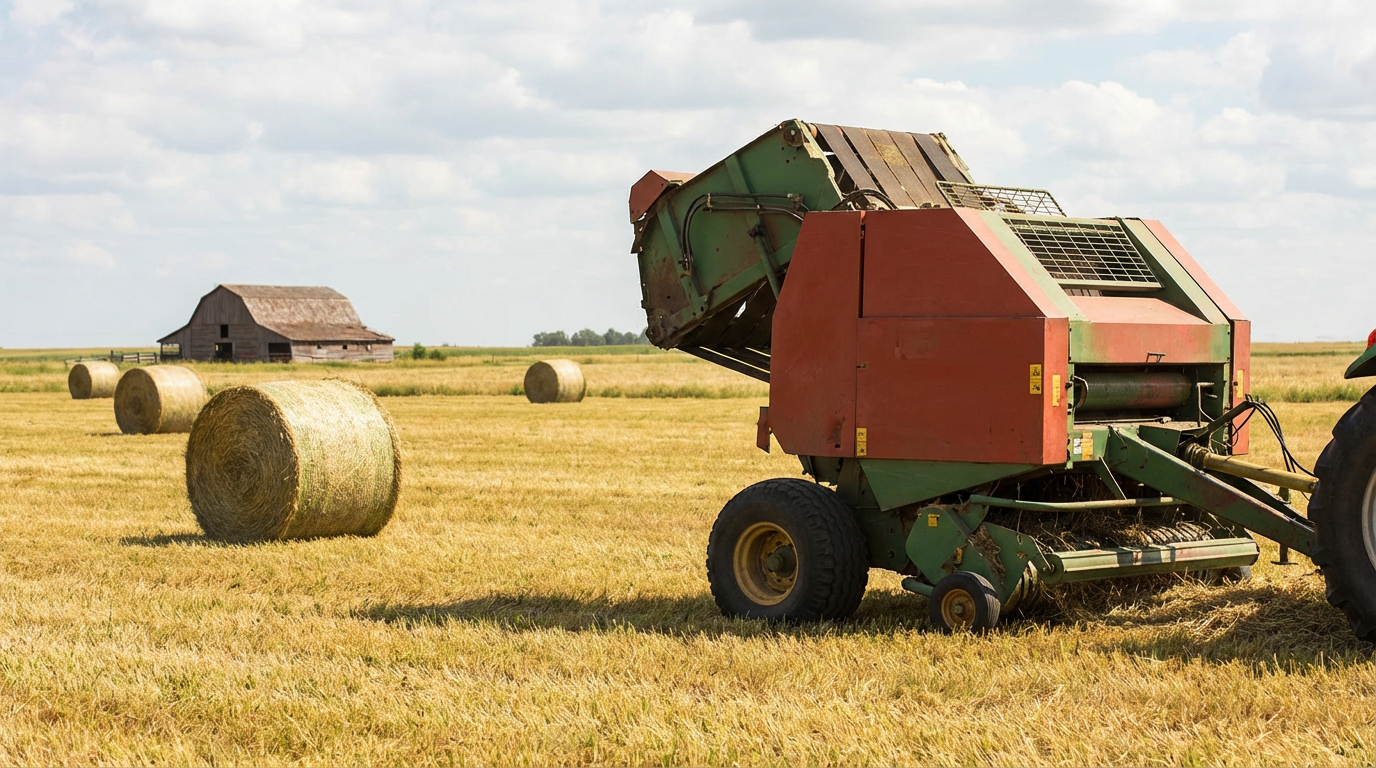
What Is a Hay Baler?
A hay baler is a machine that compresses cut hay (or other forage) into compact bales for storage and transport. Round balers produce large cylindrical bales (4x4, 5x5, 6x6 feet) for livestock and outdoor storage. Square balers produce rectangular bales—small squares for horse and hobby markets, or large squares for commercial hay. Balers are typically pulled by a tractor via PTO and are essential for livestock operations, hay producers, and dairy farms.
Why Hay Baler Financing Is Different
Hay balers produce round or square bales for cattle and horse operations. John Deere, New Holland, and Vermeer dominate. Seasonal revenue; lenders may structure payments around hay season. Livestock and hay producers are primary buyers. Used balers 5–7 years old retain value. Ag-specific lenders understand these dynamics.
Hay Baler Financing Options
Several financing structures work for hay balers. Choose based on cash flow, tax situation, and ownership goals.
Equipment Loans
Borrow a set amount, make fixed monthly payments, and own the baler when the loan is paid off. Typically 0–20% down, terms 24–60 months. Rates 6–15%. Ideal if you plan long-term use. Equipment financing.
Equipment Leasing
Lower monthly payments than loans. At lease end, return, purchase at fair market value, or upgrade. Operating leases treat payments as operating expenses. Loan vs lease.

SBA Loans
SBA 7(a) loans offer longer terms and lower down payments. USDA guaranteed loans also support agricultural equipment. Approval 30–60+ days. View SBA loans.
Working capital loans are better suited for operating expenses. Use equipment financing for the baler to secure better rates tied to the asset. Working capital for fuel, repairs, payroll.
How Much Does a Hay Baler Cost?
New round balers range from roughly $25,000–$50,000 for standard models to $50,000–$80,000+ for high-capacity or silage models. New square balers (small) typically cost $15,000–$35,000; large squares can run $80,000–$150,000+. Top brands add cost. Used hay balers typically cost 30–50% less. A 5-year-old round baler might run $15,000–$35,000. Many lenders finance used equipment up to 7–10 years old. Obtain a written quote from your dealer—lenders use it to structure your financing. Estimate payments.
Hay Baler Financing Rates and Monthly Payments
Interest rates typically range from 6–15% for equipment loans and leases. Terms commonly run 24–60 months for standard equipment financing; SBA loans extend to 7–10 years. A $45,000 hay baler financed at 8% over 48 months would run roughly $1,075/month. Typical rates. Use our financing calculator. Down payment requirements vary by lender.
Requirements to Finance a Hay Baler
Lenders evaluate several factors. Meeting these improves approval odds and terms.
Credit: Most lenders look for 600+. See credit requirements. Ag equipment is asset-backed; some programs work with 580+ when revenue and down payment are strong. Down payment: 0–20% depending on credit. Time in business: 1–2+ years preferred. Newer operations may qualify via SBA or USDA. Documentation: Bank statements, tax returns (Schedule F), profit & loss, equipment quote. What lenders look at.
What to Have Ready Before You Apply
Gather these before starting: 3–6 months of business bank statements, last year's tax returns (business and personal if required), recent profit and loss, equipment quote or proposal, business formation documents, and basic business info (EIN, formation date, ownership). Having these ready speeds approval. Lenders may ask for a voided check for ACH.
When to Apply for Hay Baler Financing
Apply when you have a clear equipment need, a written quote, and financials showing your business can support the payment. Apply before hay season—approval often takes 1–5 days. Early application gives you time to compare offers. Don't wait until equipment fails. Axiant Partners matches businesses with lenders—submit once, receive offers typically within 24–48 hours.
Tips to Get Approved for Hay Baler Financing
- Improve your credit score. Pay down balances, correct errors, avoid new credit before applying.
- Provide strong revenue documentation. Clean bank statements and organized financials speed approval.
- Consider used equipment. A quality used hay baler may cost significantly less. Inspect belts and rollers carefully.
- Make a larger down payment. Reduces lender risk and can lower your rate.
- Time your application. Apply before hay season if you need the baler by a specific date.
- Work with a broker. Apply through Axiant to connect with multiple lenders at once.
Common Mistakes to Avoid When Financing a Hay Baler
- Skipping the equipment quote. Lenders need it to structure the loan.
- Applying with incomplete financials. Missing bank statements or tax returns causes delays.
- Focusing on rate alone. Terms, fees, and flexibility matter. Read the full agreement.
- Waiting until the last minute. Rush approvals may limit your options.
- Ignoring used equipment. Quality used balers can cost 30–50% less and often qualify for financing.
Why Businesses Finance Hay Balers Rather Than Pay Cash
Paying cash ties up working capital for payroll, inputs, or growth. Financing spreads the cost over the baler's useful life, matches expenses to revenue, and preserves liquidity. Equipment loans and leases offer tax benefits—Section 179 and bonus depreciation for purchases, lease payments as operating expenses. Many businesses prefer to finance to keep reserves for emergencies or opportunities.
How the Hay Baler Financing Process Works
Standard equipment financing approval takes 1–5 business days. Day 1: submit application and documents. Days 2–3: lender review, follow-up if needed. Day 4–5: approval, documentation, funding. Funds go directly to the seller; you take possession. SBA loans add 30–60+ days.
Get a Quote & Apply
Obtain a written quote from your dealer. Complete one application—we submit to multiple equipment lenders.
We Match You With Lenders
Our team identifies lenders whose programs fit your hay baler purchase. Ag equipment, new or used.
Review & Approve
Equipment financing often requires minimal docs. Decisions in 24–48 hours for many applications.
Funding & Closing
Once approved, sign documents. Funds go to the seller. You take possession of the hay baler.
Related Agricultural Equipment
Browse financing for similar equipment. One application, we match you with lenders.
Hay Baler Financing FAQ
Can you finance a used hay baler?
Yes. Many lenders finance used hay balers, typically 7–10 years old or newer. Used equipment may require a larger down payment and shorter terms. Type (round vs square), condition, and brand affect approval.
What credit score is required?
Most lenders look for 600 or higher. Scores of 680+ qualify for the best rates. Asset-backed financing sometimes works with 580+ when revenue and down payment are strong.
How long does approval take?
1–5 business days for equipment loans and leases. SBA loans add 30–60+ days. Having documents ready speeds the process.
Round bale vs square bale—does it affect financing?
Lenders typically don't distinguish by bale type. Both are commonly financed. Price, condition, and resale value matter more.
Is leasing better than buying?
It depends. Leasing offers lower payments and easier upgrades. Buying builds equity. Compare both based on cash flow. Equipment loan vs lease.
What documents are needed?
3–6 months of bank statements, tax returns (Schedule F or business), profit and loss, equipment quote, and business formation documents. Having these ready speeds approval.
More Equipment Financing Resources
Ready to Finance Your Hay Baler?
Applications are reviewed within 24–48 hours. We match livestock and hay producers with lenders who specialize in agricultural equipment financing.
Get Matched for Hay Baler Financing